

This salmon sheet pan dinner is the easiest way to get a full fish dinner on the table: baby potatoes roast until crispy, then salmon fillets and asparagus join them on the same pan for the last 12 minutes. A rub of garlic, smoked paprika and olive oil goes on everything, and fresh dill and lemon finish it.
Each serving has 39 grams of protein, 94% of your daily vitamin D and about 3.3 grams of the omega-3 fats EPA and DHA, according to USDA data for farmed Atlantic salmon. It takes about 35 minutes, with one pan to wash.
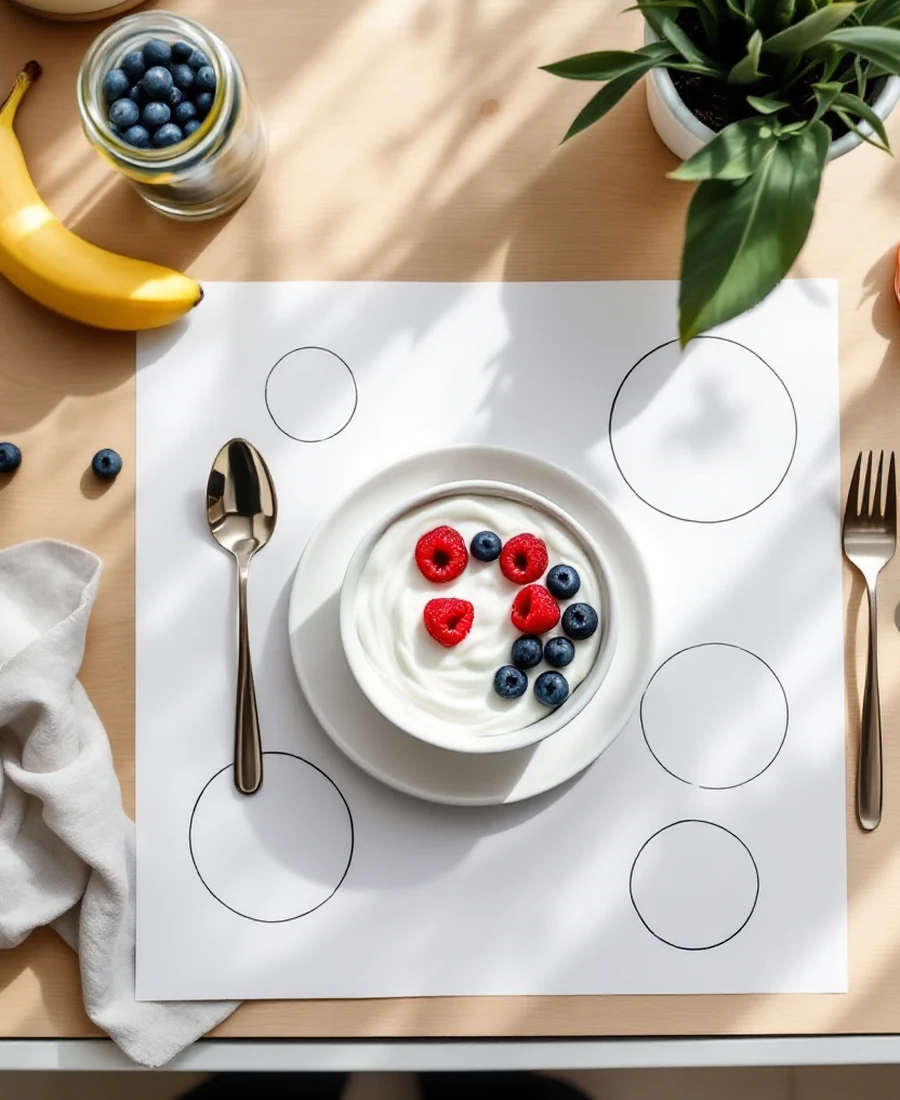
Want dinners you can build without measuring? Grab our free life-size Starter Pack: 5 printable mats you lay on the counter and fill, no measuring cups.
The key is timing. Potatoes need about 30 minutes, while salmon and asparagus need only 12 to 15, so the potatoes go in first and everything else joins them halfway.
Ingredients
For 4 servings:
- 4 salmon fillets, about 6 oz each, skin on or off
- 1 lb baby potatoes (yellow or red), halved
- 1 bunch asparagus (about 1 lb), woody ends snapped off
- 2 tbsp olive oil, divided
- 3 cloves garlic, minced
- 1 tsp smoked paprika
- 2 tbsp lemon juice, plus lemon wedges to serve
- 2 tbsp chopped fresh dill (or 1 tsp dried)
- Salt and black pepper, to taste
How to make a salmon sheet pan dinner
- Heat the oven to 425°F and line a large rimmed sheet pan with parchment.
- Roast the potatoes first. Toss the halved potatoes with 1 tablespoon of the olive oil, salt and pepper, and spread them cut side down on the pan. Roast 15 to 18 minutes, until the undersides are golden.
- Season the salmon. Mix the remaining tablespoon of olive oil with the garlic and smoked paprika. Pat the salmon dry, season with salt and pepper and brush the garlic paprika oil over the tops.
- Add the salmon and asparagus. Push the potatoes to the edges. Lay the salmon in the middle (skin side down) and the asparagus alongside. Brush any leftover oil over the asparagus.
- Roast 12 to 15 minutes, until the salmon flakes easily and reaches 145°F in the thickest part and the asparagus is tender with browned tips.
- Finish with the lemon juice and dill, and serve with lemon wedges.
Tips for sheet pan salmon that turns out right
- Cut side down for crispy potatoes. The flat side browns against the hot pan; don’t stir them during the first roast.
- Pat the salmon dry so the rub sticks and the top browns a little.
- Match the asparagus to the salmon. Thin spears cook in about 10 minutes, thick ones in 15. If yours are pencil-thin, add them 3 minutes after the salmon.
- Thick or thin fillets. A 1-inch-thick fillet takes about 12 minutes at 425°F; thinner tail pieces are done sooner, so check early.
- Skin on is easier. The skin protects the fish from drying out and slips right off after cooking if you don’t eat it.
Salmon sheet pan dinner nutrition (USDA)
Calculated with USDA FoodData Central, per serving (1 fillet plus a quarter of the vegetables). Salt to taste is not included.
| Nutrient | Per serving | % Daily Value |
|---|---|---|
| Calories | 515 | |
| Protein | 38.7 g | 77% |
| Vitamin D | 18.7 mcg | 94% |
| Vitamin B12 | 5.5 mcg | 229% |
| Omega-3 (EPA + DHA) | about 3.3 g | |
| Potassium | 1,284 mg | 27% |
| Folate | 111 mcg | 28% |
| Iron | 3.2 mg | 18% |
| Fiber | 4.8 g | 17% |
| Saturated fat | 6.2 g | |
| Sodium | 121 mg | 5% |
The vitamin D, B12 and omega-3 numbers come from USDA’s entry for farmed Atlantic salmon, and they vary with the fish. The asparagus brings folate and the potatoes most of the potassium and fiber.
Farmed Atlantic salmon is a rich fish: most of the 30 grams of fat per serving comes from the salmon itself, including the omega-3s. If you want a lighter plate, wild salmon has about 400 calories per serving in this recipe and less than half the saturated fat (see the table below), or use 4-ounce fillets.
Sheet pan salmon variations
All numbers are per serving (4 servings), from USDA data:
| Version | Change | Calories | Protein | Fiber | Vitamin C |
|---|---|---|---|---|---|
| Potatoes + asparagus | As written | 515 | 38.7 g | 4.8 g | 29% |
| Potatoes + broccoli | 12 oz broccoli instead of asparagus | 527 | 39.2 g | 5.2 g | 108% |
| Potatoes + green beans | 12 oz green beans instead of asparagus | 525 | 38.4 g | 5.3 g | 35% |
| Brussels sprouts + potatoes | 12 oz halved sprouts instead of asparagus | 535 | 39.7 g | 6.2 g | 104% |
| Sweet potatoes + broccoli | Both swaps | 547 | 39.1 g | 5.9 g | 99% |
| Wild salmon | Wild Atlantic instead of farmed | 403 | 37.7 g | 4.8 g | 21% |
| Low-carb | No potatoes, double asparagus | 454 | 38.7 g | 3.9 g | 22% |
Salmon sheet pan dinner with potatoes and broccoli
The most popular swap, especially in winter when asparagus is pricey: use 12 ounces of broccoli florets instead. Add them with the salmon; they roast in the same 12 to 15 minutes. Broccoli raises the vitamin C to 108% of the daily value and adds a little fiber. Green beans work the same way. The sweet potato and broccoli version gets a full day’s vitamin A as well; cut the sweet potato in 3/4-inch cubes and give it the same head start as the potatoes.
Sheet pan salmon and Brussels sprouts
Halve 12 ounces of Brussels sprouts and roast them with the potatoes from the start, since they need about 25 minutes. This version has the most fiber (6.2 grams). Brussels sprouts are very high in vitamin K (131% DV per serving here), so if you take a blood thinner such as warfarin, keep your vitamin K intake steady and check with your doctor. More ideas in our Brussels sprouts recipes collection.
What to serve with it
- A simple green salad, or our roasted Brussels sprouts and sweet potatoes for a bigger spread
- A spoonful of plain Greek yogurt mixed with lemon, dill and garlic as a quick sauce
- Love salmon? Try our lemon garlic salmon pasta with spinach
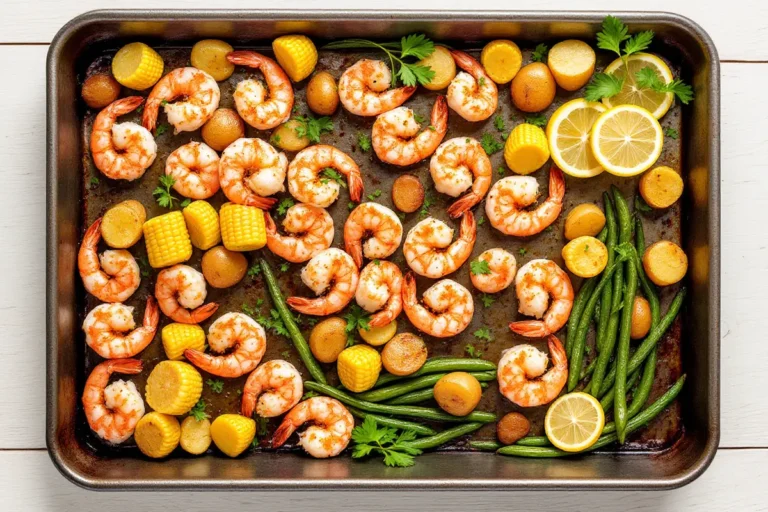
- More seafood on one pan: our shrimp sheet pan dinner, an oven shrimp boil with corn and potatoes
- Need more salmon ideas? See our 12 healthy salmon recipes, from rice bowls to tacos
- More one-pan dinners: the honey mustard chicken thigh sheet pan dinner and the sheet pan roasted vegetables time chart
Storage and leftovers
- Fridge: keeps up to 3 days in an airtight container.
- Reheat gently: 10 minutes at 275°F in the oven keeps the salmon from drying out, or eat the salmon cold, flaked over a salad.
- Leftover ideas: flake the salmon into a grain bowl or fold it into scrambled eggs.
FAQ
What temperature do you bake salmon on a sheet pan?
425°F works best for a sheet pan dinner. It roasts the potatoes and asparagus while the salmon cooks through in 12 to 15 minutes. Salmon is done at 145°F, when it flakes easily with a fork.
How long does salmon take at 425°F?
About 12 to 15 minutes for fillets around 1 inch thick. Thinner pieces can be done in 8 to 10 minutes, so check the thickest part with a thermometer.
Should salmon be covered when baking?
No. Uncovered salmon browns a little on top and the vegetables roast instead of steaming. If your fillets are very thin, you can tent them with foil for the last few minutes to keep them moist.
Do you flip salmon on a sheet pan?
No need. Roast it skin side down the whole time; the skin protects the bottom and releases easily once it’s cooked.
Can you use frozen salmon?
Yes. Thaw it overnight in the fridge for even cooking. Roasting straight from frozen works too: rinse off any ice, pat it dry and add about 5 to 8 minutes, checking for 145°F.
The short version
Roast halved baby potatoes at 425°F for 15 to 18 minutes. Add salmon fillets brushed with garlic, smoked paprika and olive oil, plus asparagus, and roast 12 to 15 minutes until the salmon reaches 145°F. Finish with lemon and dill. One pan, about 35 minutes, with 39 grams of protein, 94% of your daily vitamin D and about 3.3 grams of omega-3 per serving. For more one-pan ideas, browse all our healthy sheet pan dinners.

Get the free life-size Starter Pack. 5 printable mats you lay on the counter and fill, no measuring cups. Print it, lay it down and match each ingredient to its shape.

Salmon Sheet Pan Dinner With Potatoes and Asparagus
Ingredients
Method
- Heat the oven to 425°F and line a large rimmed sheet pan with parchment.
- Toss the halved potatoes with 1 tbsp of the olive oil, salt and pepper and spread them cut side down. Roast 15 to 18 minutes, until the undersides are golden.
- Mix the remaining 1 tbsp olive oil with the garlic and smoked paprika. Pat the salmon dry, season with salt and pepper and brush the oil over the tops.
- Push the potatoes to the edges. Lay the salmon in the middle, skin side down, and the asparagus alongside; brush any leftover oil over the asparagus.
- Roast 12 to 15 minutes, until the salmon reaches 145°F and flakes easily and the asparagus is tender.
- Finish with the lemon juice and dill and serve with lemon wedges.



Leave a Reply