
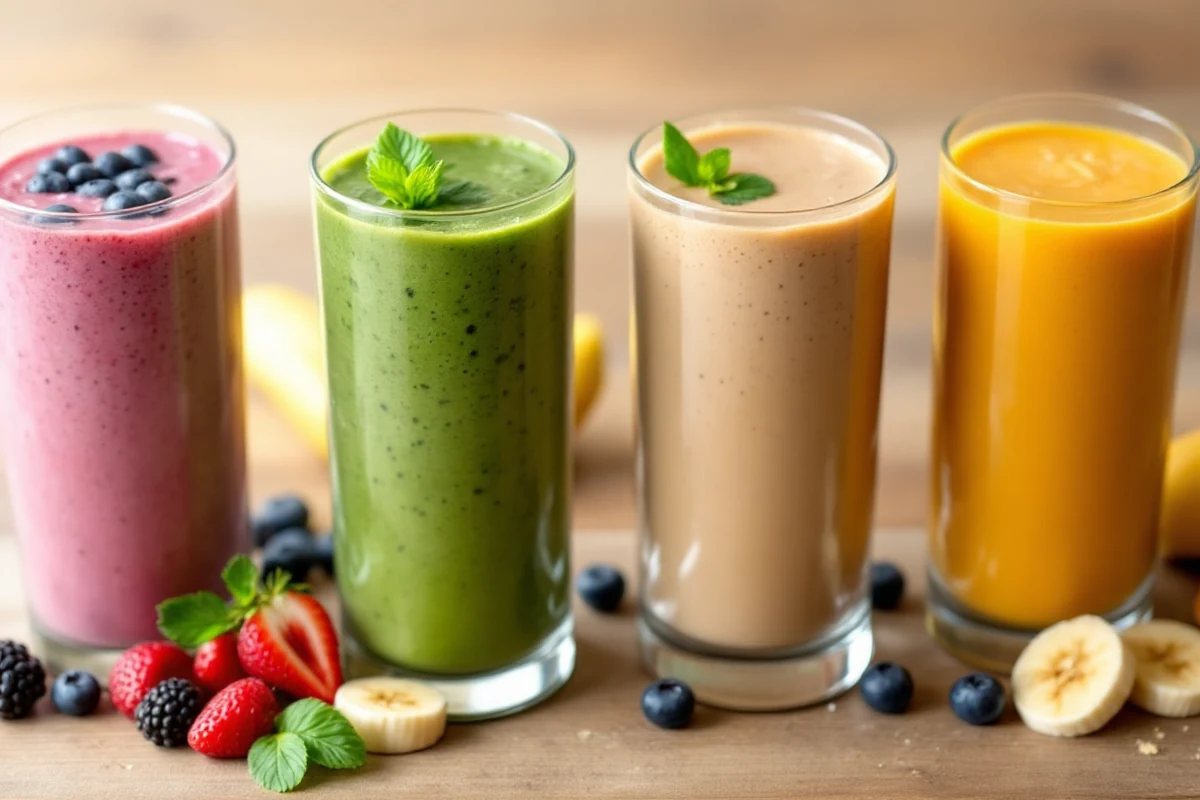
A smoothie is the fastest breakfast I know that still keeps me full: dump, blend, pour, done in three minutes. The trick is making sure it’s more than fruit juice in disguise. These protein smoothie recipes each bring 21 to 37 grams of protein, and a few of them don’t use any protein powder at all.
I calculated every number from USDA FoodData Central using the amounts listed. Each recipe makes one large glass, about 16 to 20 ounces.
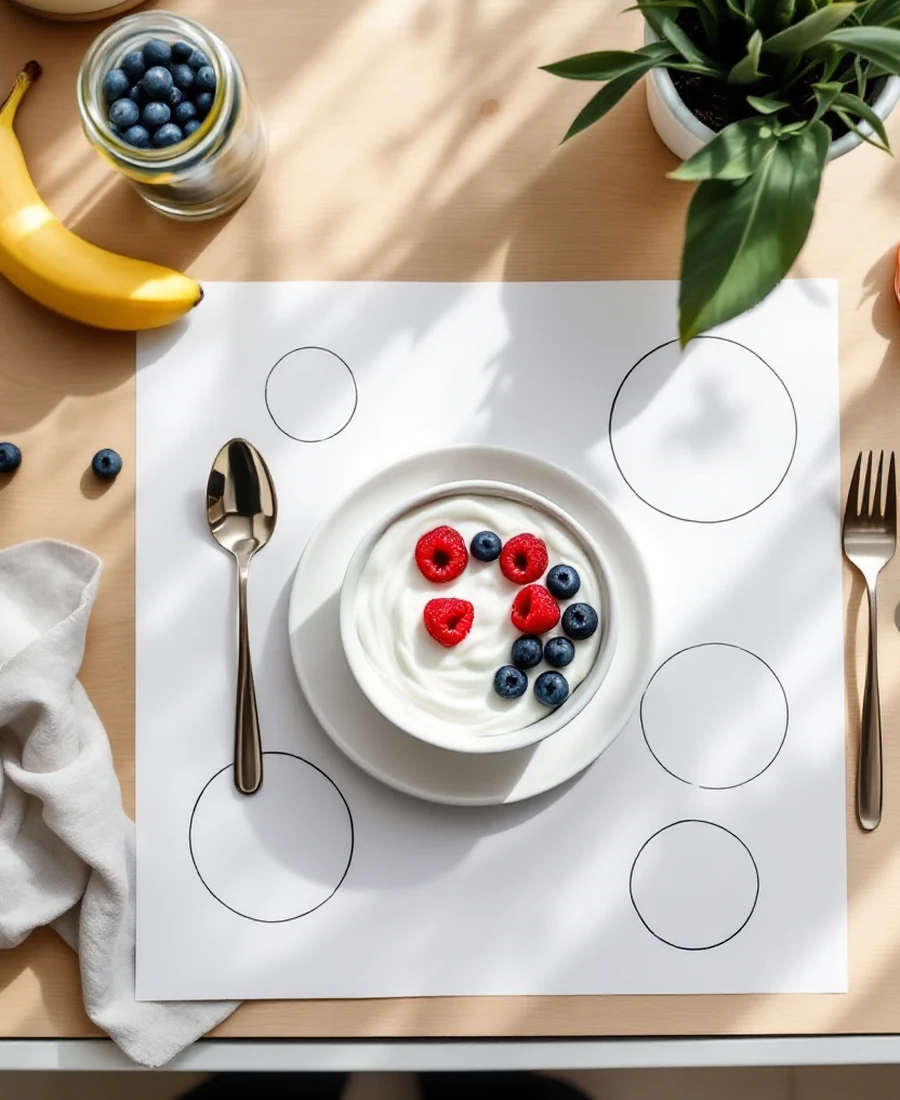
Want a breakfast you can make without measuring? Grab our free life-size Starter Pack: 5 printable mats, including our 32g protein yogurt bowl. Lay it on the counter and match the shapes.
How to make a good protein smoothie
Every smoothie here follows the same simple formula:
- Liquid (1 cup): skim milk, soy milk or unsweetened almond milk
- Protein (20g+): a scoop of whey, 3/4 cup Greek yogurt, 1/2 cup cottage cheese or 100g of firm tofu
- Fruit (1/2 to 1 cup): frozen fruit makes it thick and cold, so you need less ice
- Extras (optional): nut butter, oats, cocoa, cinnamon, spinach
What is the 1-2-3 smoothie rule?
There’s no official version, but a common one is roughly 1 part liquid, 2 parts fruit and vegetables, and 3 add-ins like protein, healthy fat and fiber. For a breakfast that keeps you going, make sure one of those add-ins is a real protein source. A spoonful of seeds won’t get you there.
Protein smoothies with protein powder
One scoop of whey (about 30g) adds roughly 23g of protein, the easiest way to get a breakfast smoothie past 30g.
1. Chocolate peanut butter smoothie (37g protein)
One cup skim milk, a scoop of whey, a tablespoon of cocoa, a tablespoon of peanut butter and half a frozen banana. Tastes like a milkshake. It’s my most-made smoothie, honestly.
2. Peanut butter banana smoothie (37g protein)
One cup skim milk, a scoop of vanilla whey, a whole banana and a tablespoon of peanut butter. The classic. Freeze banana halves ahead so you always have some ready.
3. Oatmeal breakfast smoothie (35g protein)
Blend a cup of milk, a scoop of whey, 1/4 cup of rolled oats, half a banana and cinnamon. The oats make it thicker and more filling, like drinkable oatmeal.
4. Cherry almond smoothie (35g protein)
Soy milk, a scoop of whey, 1/2 cup frozen dark sweet cherries and a tablespoon of almond butter. Soy milk adds 7g of protein compared with almond milk’s 1g.
5. Coffee protein smoothie (33g protein)
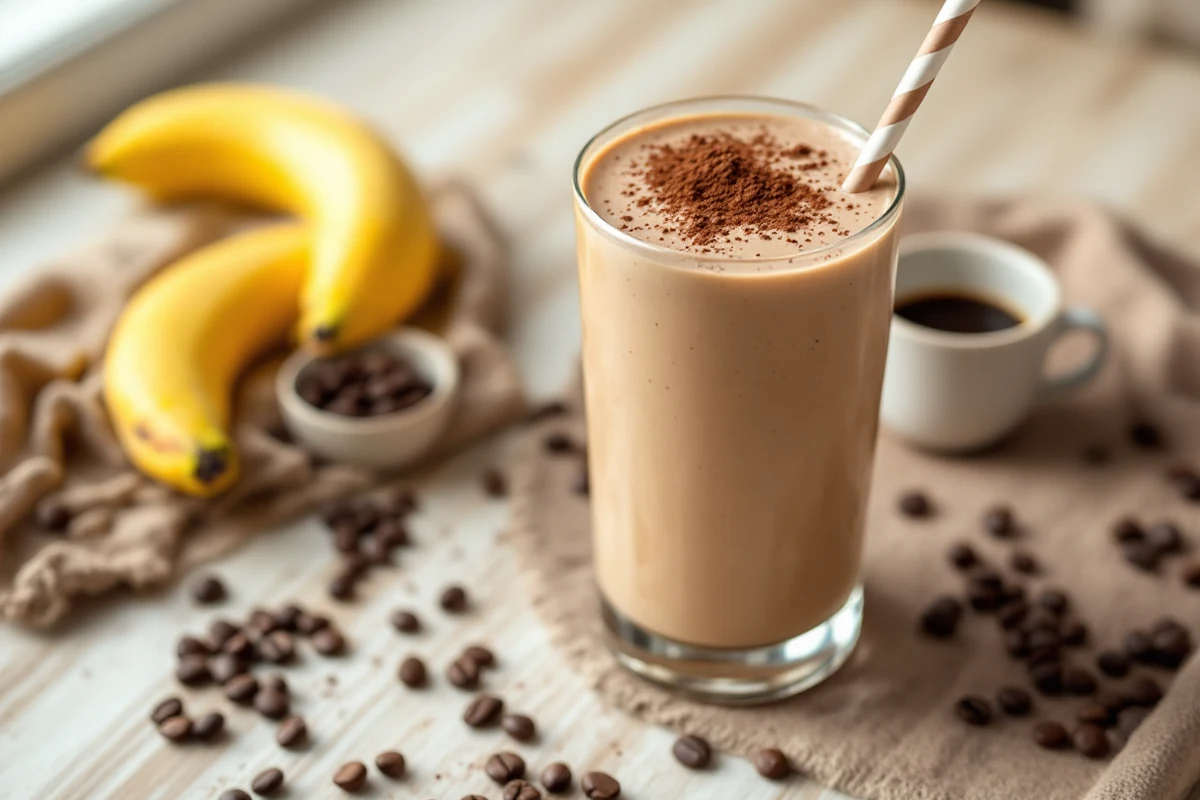
Half a cup of cold coffee, a cup of skim milk, a scoop of whey, half a frozen banana and a teaspoon of cocoa. Breakfast and coffee in one glass. Get the full coffee protein smoothie recipe: with oats and chia it reaches 35g protein and 8g fiber.
6. Pumpkin pie smoothie (33g protein)

A cup of milk, a scoop of vanilla whey, 1/4 cup canned pumpkin, half a frozen banana and cinnamon or pumpkin pie spice. Use up leftover pumpkin from our pumpkin protein pancakes.
7. Mixed berry protein smoothie (33g protein)
A cup of skim milk, a scoop of whey, 2/3 cup strawberries and 1/2 cup blueberries. Frozen berries make it thick enough for a spoon.
8. Green protein smoothie (28g protein)
Almond milk, a scoop of whey, a big handful of spinach, half a banana and half a tablespoon of peanut butter. You taste the banana and peanut butter, not the spinach. It’s a light one at about 250 calories.
Protein smoothies without protein powder
No powder? Greek yogurt, cottage cheese and tofu get you past 20g easily.
9. Mango Greek yogurt smoothie (26g protein)
A cup of skim milk, 3/4 cup plain Greek yogurt and 1/2 cup frozen mango. It tastes like a mango lassi.
10. Greek yogurt berry smoothie (26g protein)
A cup of milk, 3/4 cup Greek yogurt and 1/2 cup frozen blueberries. Thick, tangy and bright purple.
11. Tofu raspberry smoothie (26g protein, 8g fiber)
A cup of soy milk, 100g of firm tofu, 1/2 cup raspberries and a teaspoon of maple syrup. Tofu disappears completely in a blender and makes the smoothie creamy. It’s dairy-free, and it has the most fiber of any smoothie here.
12. Cottage cheese peach smoothie (21g protein)
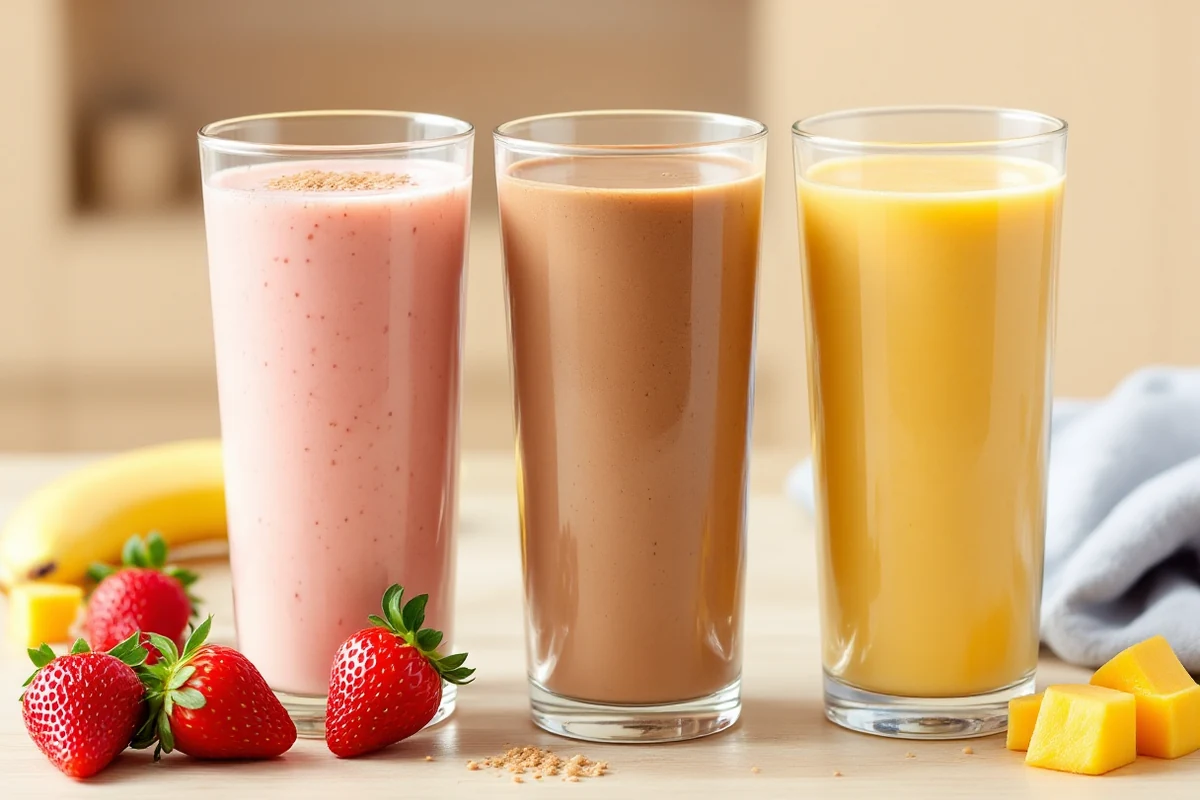
A cup of milk, 1/2 cup cottage cheese and a frozen peach. Blend longer than you think, about 60 seconds, so the cottage cheese turns completely smooth. For strawberry banana, chocolate peanut butter and mango versions, see our cottage cheese smoothie. More ideas like this in our cottage cheese breakfast recipes.
Quick comparison
| Smoothie | Protein | Fiber | Calories |
|---|---|---|---|
| Chocolate peanut butter | 37g | 5g | 348 |
| Peanut butter banana | 37g | 5g | 390 |
| Oatmeal | 35g | 5g | 320 |
| Cherry almond | 35g | 6g | 379 |
| Coffee | 33g | 3g | 247 |
| Pumpkin pie | 33g | 4g | 265 |
| Mixed berry | 33g | 5g | 263 |
| Green | 28g | 4g | 250 |
| Mango Greek yogurt | 26g | 1g | 237 |
| Greek yogurt berry | 26g | 2g | 229 |
| Tofu raspberry | 26g | 8g | 326 |
| Cottage cheese peach | 21g | 2g | 233 |
Are protein smoothies good for you?
They can be a solid breakfast, as long as there’s real protein in the glass along with the fruit. A fruit-only smoothie can have plenty of sugar and very little protein or fat, so it doesn’t hold you for long. Adding 20g or more of protein, plus some fiber from oats, berries or chia, makes it a full meal.
Two tips:
- Use whole fruit, not juice. Juice drops the fiber.
- Watch the extras. Nut butters and sweeteners add calories fast. Measure them.
Should you drink it or eat it?
If a smoothie never keeps you full, try a smoothie bowl: use about 1/4 cup less milk so it’s spoonable, pour it into a bowl and top with a tablespoon of hemp hearts, a few berries and some sliced almonds. Eating it slowly with a spoon makes a big difference for a lot of people, and the toppings add protein and crunch. Full recipe: my high protein smoothie bowl with 37g protein.
Smoothie meal prep
Fill freezer bags with the fruit, spinach, oats and nut butter for each smoothie. In the morning, dump one bag into the blender with the milk and protein. Bags keep about 3 months in the freezer.
Best frozen fruit for protein smoothies
Frozen fruit is the secret to a thick, cold smoothie without watering it down with ice:
- Banana: the creamiest. Peel, halve and freeze ripe bananas in a bag.
- Mixed berries: more fiber than most fruit and a bright color.
- Mango and peach: sweet and smooth, great with Greek yogurt.
- Cherries: pair perfectly with chocolate or almond.
- Cauliflower rice (frozen): sounds odd, but a 1/2 cup adds thickness with very little flavor. Try it once.
Smoothie troubleshooting
- Too thin? Add more frozen fruit, a spoonful of Greek yogurt or 2 tablespoons of oats.
- Too thick? Add milk a splash at a time and blend again.
- Chalky? Your protein powder may not blend well. Blend the milk and powder first for 15 seconds, then add everything else.
- Not sweet enough? Use a riper banana or a few dates before you reach for syrup.
- Gritty from cottage cheese or oats? Blend a full 60 seconds, or soak the oats in the milk for 5 minutes first.
A basic blender works for all of these. If yours struggles with frozen fruit, let the fruit sit out for 5 minutes before blending.
FAQ
What do I put in a protein smoothie?
A cup of milk, a protein source (whey, Greek yogurt, cottage cheese or tofu), frozen fruit and optional extras like nut butter, oats or spinach.
What is the 1-2-3 smoothie rule?
A loose ratio: about 1 part liquid, 2 parts fruit and vegetables, and 3 add-ins such as protein, healthy fat and fiber.
How do you make a protein smoothie without protein powder?
Use 3/4 cup Greek yogurt, 1/2 cup cottage cheese or 100g of firm tofu with milk or soy milk. Each gets you to about 21 to 26g of protein.
How do you make a healthy smoothie?
Use whole fruit instead of juice, add a real protein source, include some fiber, and keep sweeteners small.
How much protein should a breakfast smoothie have?
Aim for at least 20g. Every smoothie here has 21 to 37g.
No protein powder in the house? Try these 10 protein smoothies without protein powder, made with Greek yogurt, cottage cheese, silken tofu and kefir.
The short version
Liquid, protein, frozen fruit, extras. These 12 protein smoothie recipes give you 21 to 37 grams of protein in about three minutes, with or without protein powder.
More fast mornings: 25 easy high protein breakfast ideas and 19 high protein low calorie breakfast ideas.

Get the free life-size Starter Pack. Print it, lay it on your counter and match each topping to its shape: 32g protein + 13g fiber in one bowl, and you never pick up a measuring cup.


Leave a Reply