

These high protein breakfast muffins are the egg muffins I keep in the fridge for mornings when I have exactly four minutes. Eggs and cottage cheese get blended together, poured over spinach, red pepper and cheddar, and baked. Three muffins give you 26 grams of protein for under 300 calories.
The cottage cheese is the secret. It makes these fluffy, almost like a mini soufflé, instead of the rubbery, squeaky egg muffins I used to make.
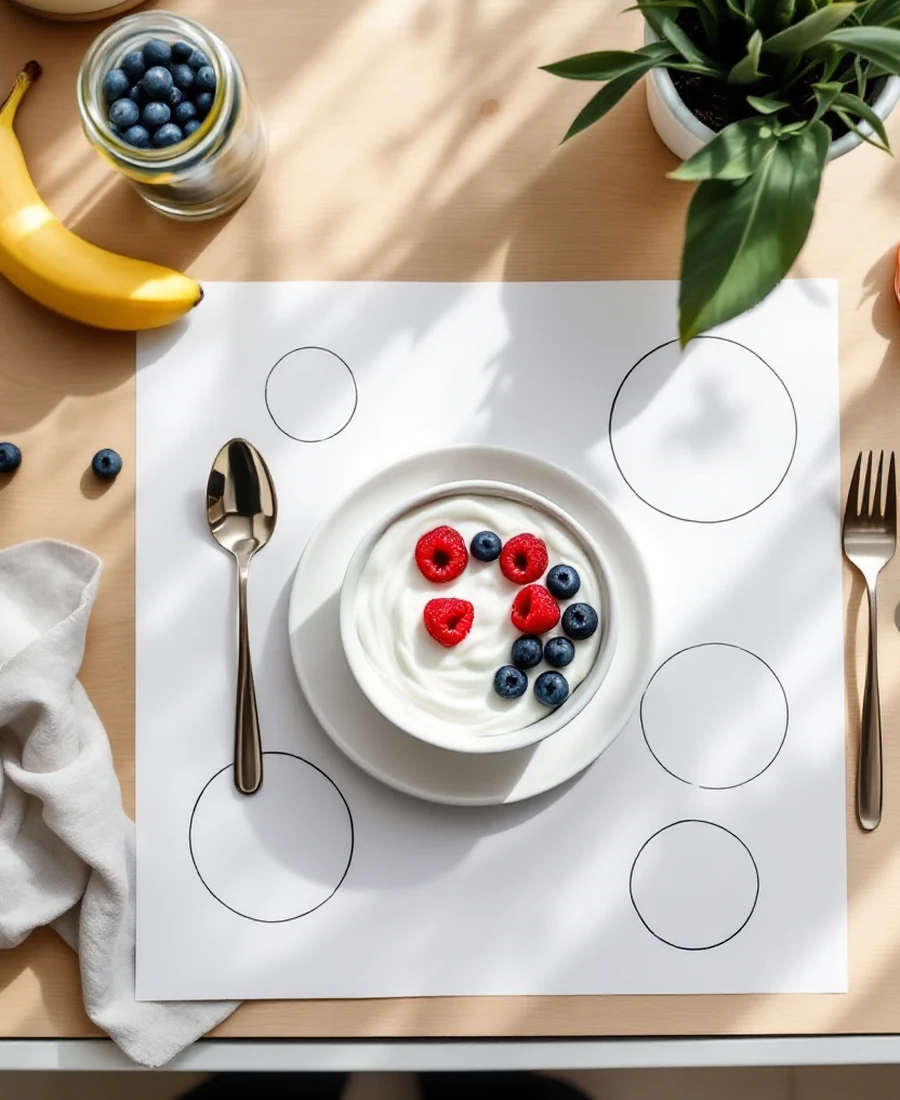
Like breakfasts you don’t have to think about? Grab our free life-size Starter Pack: 5 printable mats, including our 32g protein yogurt bowl. Match the shapes on your counter and skip the measuring.
Why add cottage cheese to egg muffins?
- More protein. One cup of cottage cheese adds about 23g to the batch.
- Softer texture. Blended cottage cheese keeps the eggs tender and stops that rubbery bounce.
- They reheat better. Egg-only muffins weep water and turn spongy. These stay moist.
If you’ve never blended cottage cheese, don’t worry. It disappears completely. Nobody eating these will know it’s there.
Ingredients (12 muffins)

- 10 large eggs
- 1 cup (226g) low-fat cottage cheese (2%)
- 2 cups (60g) baby spinach, chopped
- 1 medium red bell pepper, diced
- 1/2 medium onion, diced
- 1/2 cup (56g) shredded cheddar
- Salt, pepper and a pinch of garlic powder
How to make high protein breakfast muffins
- Heat the oven to 350°F. Grease a 12-cup muffin tin really well, or use silicone liners. Paper liners stick to eggs, so skip those.
- Blend the eggs and cottage cheese until smooth, about 20 seconds. Season with salt, pepper and garlic powder.
- Divide the spinach, red pepper, onion and cheddar among the 12 cups.
- Pour the egg mixture over the vegetables, filling each cup about 3/4 full.
- Bake 20 to 22 minutes, until puffed and set in the middle.
- Cool 5 minutes, run a butter knife around each muffin, and lift them out.
They puff up a lot in the oven and settle as they cool. That’s normal.
Want softer onions?
Cook the onion and pepper in a pan for 4 to 5 minutes before adding them to the cups. Raw veggies work fine, but they stay a little crunchy.
Nutrition per serving (3 muffins)
From USDA FoodData Central:
| Per 3 muffins | Amount | % Daily Value |
|---|---|---|
| Calories | 298 | |
| Protein | 26g | 52% |
| Fiber | 1g | 4% |
| Carbs | 8g | 3% |
| Fat | 18g | 23% |
| Calcium | 252mg | 19% |
| Sodium | 457mg | 20% |
That’s before salt. One muffin is about 100 calories and 9g of protein, an easy snack too.
Add fiber on the side
Egg muffins are high in protein but low in fiber. I eat mine with a piece of fruit (a pear or a cup of raspberries adds 6 to 8g of fiber) or a slice of whole grain toast. If you want protein and fiber in one bowl, my high protein high fiber breakfast ideas has 15 options.
Mix-in ideas
Keep the eggs and cottage cheese the same and change the fillings:
Ham and cheese
Diced ham instead of the pepper. Adds about 3g of protein per serving.
Greek
Spinach, sun-dried tomatoes and feta instead of cheddar.
Mexican
Black beans, salsa and pepper jack. The beans add fiber too.
Broccoli cheddar
Chopped steamed broccoli instead of the spinach.
Turkey sausage
Cooked, crumbled turkey sausage with the spinach. Great if you want a heartier muffin.
Storing and reheating
- Fridge: 4 days in a sealed container lined with a paper towel.
- Freezer: freeze on a tray, then bag them. They keep 2 months.
- Reheat: 30 to 45 seconds in the microwave from the fridge, 60 to 90 seconds from frozen.
Batch cooking on Sunday? These pair nicely with my sheet pan protein pancakes for a sweet and savory week. And if you like eggs baked in one pan, my high protein breakfast casserole has 32g of protein per slice.
Why are my egg muffins sticking?
Eggs glue themselves to metal. Silicone liners or a silicone muffin pan are the easiest fix. Otherwise, grease every cup generously with butter or spray, including the top rim.
FAQ
How do you make high protein breakfast muffins?
Blend 10 eggs with 1 cup of cottage cheese, pour over chopped spinach, peppers, onion and cheddar in a greased muffin tin, and bake at 350°F for 20 to 22 minutes.
How do you make high protein egg muffins without cottage cheese?
Replace the cottage cheese with 3/4 cup of liquid egg whites or 3/4 cup of Greek yogurt. The texture is a little firmer.
How many egg muffins should I eat?
Three muffins give you about 26g of protein and 300 calories. Two make a lighter breakfast or a solid snack.
How long do egg muffins last?
4 days in the fridge or 2 months in the freezer.
Can I make them dairy-free?
Leave out the cottage cheese and cheddar and add 2 more eggs. Expect about 19g of protein per 3 muffins.
The short version
Blend eggs with cottage cheese, pour over vegetables and cheddar, bake. These high protein breakfast muffins give you 26 grams of protein in three muffins, and they reheat soft and fluffy all week.
For more grab-and-go ideas, see our 25 easy high protein breakfast ideas. Prefer a silky, coffee shop texture? Try our blended cottage cheese egg bites. Want a bready muffin instead of an egg one? Our blender cottage cheese muffins use oat flour.
Want more like this? Browse all 21 high protein breakfast meal prep recipes.

Get the free life-size Starter Pack. Print it, lay it on your counter and match each topping to its shape: 32g protein + 13g fiber in one bowl, and you never pick up a measuring cup.

High Protein Breakfast Muffins
Ingredients
Method
- Heat the oven to 350°F and grease a 12-cup muffin tin well or use silicone liners.
- Blend or whisk the eggs and cottage cheese until smooth.
- Divide the spinach, red pepper, onion and cheddar among the cups.
- Pour the egg mixture over the vegetables, filling each cup about 3/4 full.
- Bake 20–22 minutes, until puffed and set in the center.
- Cool 5 minutes, then run a knife around each muffin and lift out.




Leave a Reply