

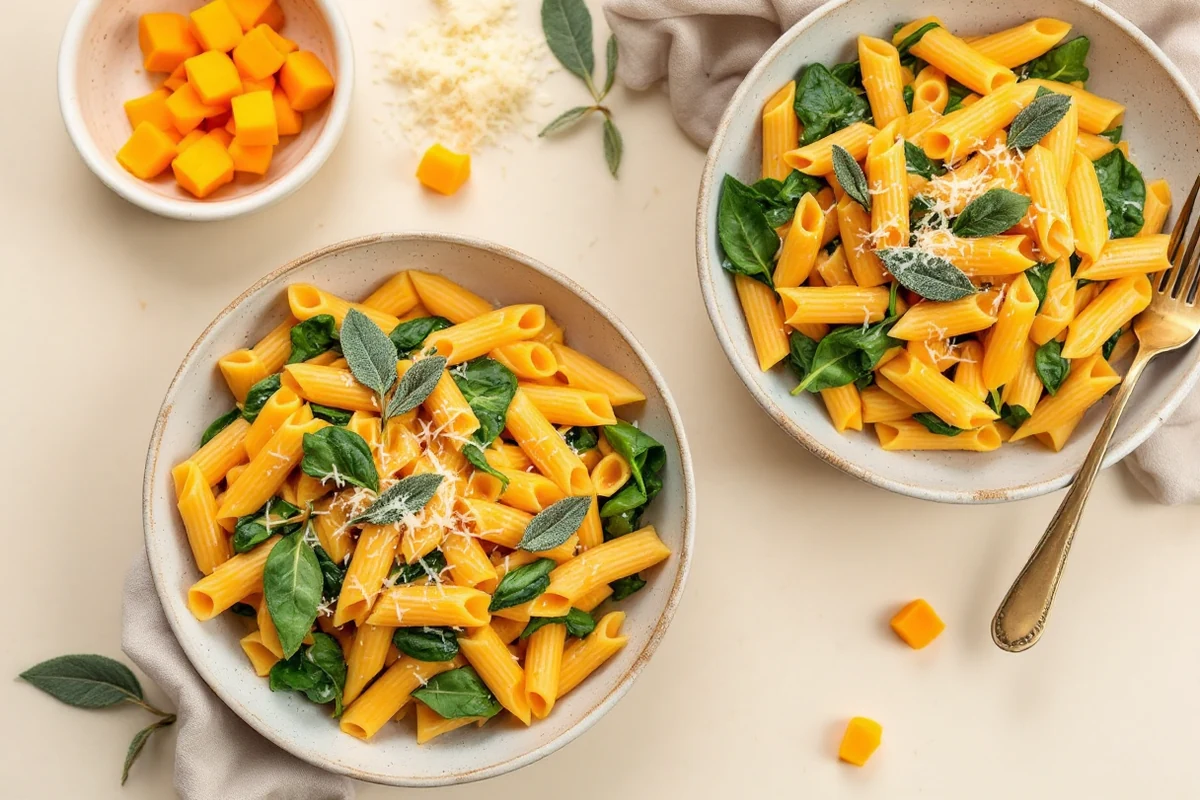
This butternut squash pasta gets its creamy sauce from roasted squash, not cream. You roast cubed butternut squash with onion and garlic until it’s soft and caramelized, blend it with broth and parmesan, then toss it with pasta and a few handfuls of spinach. The sauce is thick, silky, a little sweet and very cozy.
It takes about 45 minutes, and most of that is the oven doing the work. Each bowl has 120% of your daily vitamin A, 7 grams of fiber and 18 grams of protein.
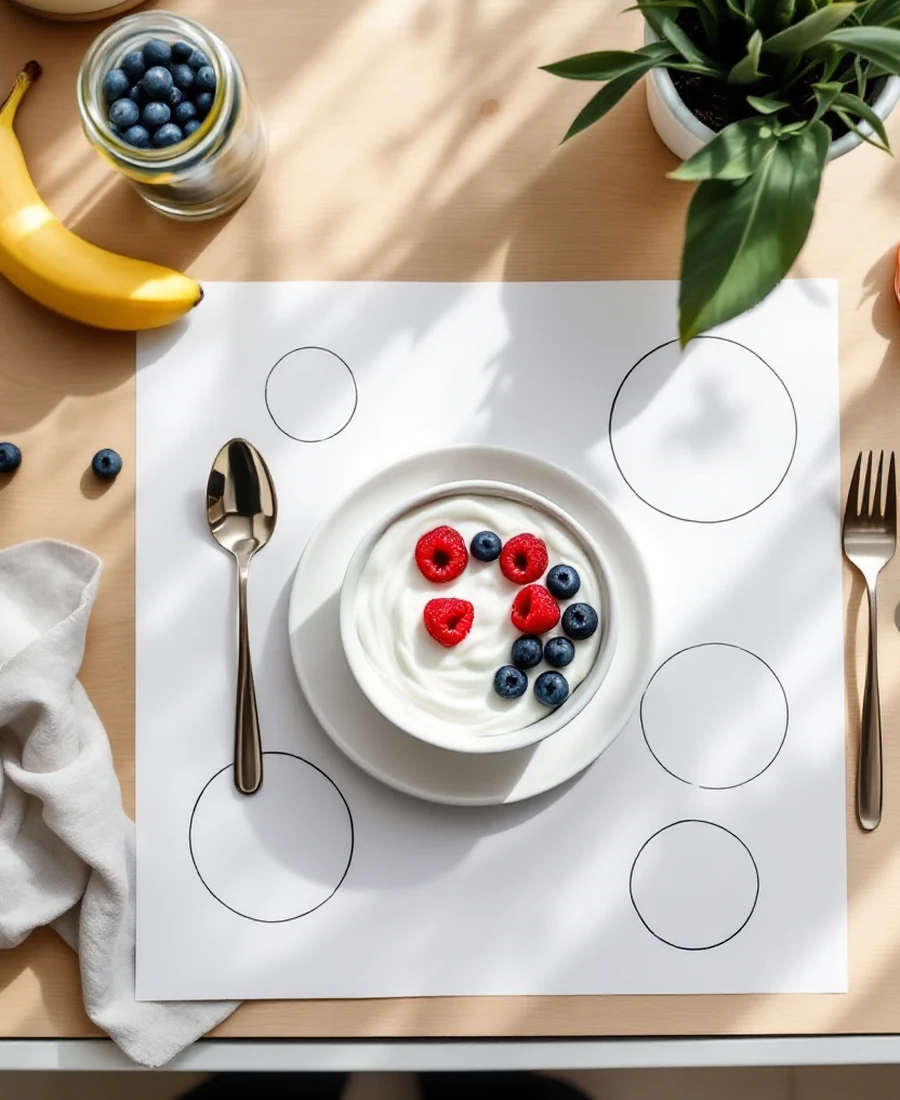
Want meals you can build without measuring? Grab our free life-size Starter Pack: 5 printable mats you lay on the counter and fill, no measuring cups.
Roasting matters here. Simmered squash makes a sauce that tastes flat and sweet. Roasted squash picks up browned edges, and the roasted onion and garlic give the sauce a savory depth that keeps it from tasting like baby food.
Ingredients
For 4 bowls:
- 1 small butternut squash (about 700g peeled and cubed, 5 cups), in 1-inch cubes
- 1 medium yellow onion (110g), cut in wedges
- 4 garlic cloves, peeled
- 2 tbsp olive oil
- 1 tsp dried sage (or 8 fresh sage leaves)
- 1 cup vegetable broth, plus more if needed
- 12 oz short pasta (rigatoni, penne or shells)
- 1/2 cup grated parmesan (50g), plus more to serve
- 3 cups baby spinach (90g)
- Salt, black pepper and a pinch of red pepper flakes
- 1/2 cup pasta water, saved before draining
How to make butternut squash pasta
- Roast. Heat the oven to 425°F. Toss the squash, onion and garlic with the olive oil, sage, a big pinch of salt and some pepper on a sheet pan. Roast 25 to 30 minutes, flipping once, until the squash is soft all the way through and browned at the edges.
- Boil the pasta. While the squash roasts, cook the pasta in salted water until al dente. Scoop out 1/2 cup of the starchy pasta water before you drain it.
- Blend the sauce. Put the roasted squash, onion and garlic in a blender with the broth and parmesan. Blend until completely smooth. It should be thick but pourable; add a splash more broth if the blender struggles.
- Toss. Return the drained pasta to the pot over low heat. Pour in the sauce and the spinach and stir for 1 to 2 minutes, until the spinach wilts. Add pasta water a little at a time until the sauce coats every piece.
- Season and serve. Taste, then add salt, pepper and a pinch of red pepper flakes. Top with more parmesan and a few sage leaves.
Butternut squash pasta sauce: tips for the creamiest result
- Roast until it’s really soft. A fork should slide through the biggest cube with no push. Undercooked squash blends grainy.
- Use the pasta water. The starch helps the sauce cling and turns it glossy. Add it slowly; you can always add more.
- Blend longer than you think. Give it a full minute in a blender for the silkiest sauce.
- Make it less sweet. Butternut squash is naturally sweet. Roast the onion until it’s dark at the edges, add an extra garlic clove, finish with a squeeze of lemon and use plenty of black pepper and parmesan.
- Shortcut squash. Pre-cubed fresh squash from the store saves 10 minutes of peeling. Frozen cubes work too: roast them straight from frozen and add 10 minutes.
- Crispy sage. For a restaurant-style topping, fry 8 fresh sage leaves in a spoon of olive oil for 30 seconds, until they turn darker and crisp, and crumble them on top.
Butternut squash pasta nutrition (per bowl)
Calculated with USDA FoodData Central, per bowl (1/4 of the recipe). The salt in the pasta water and the salt you add to taste are not included.
| Nutrient | Per bowl | % Daily Value |
|---|---|---|
| Calories | 531 | |
| Vitamin A | 1,078 mcg | 120% |
| Vitamin K | 118 mcg | 98% |
| Folate | 299 mcg | 75% |
| Vitamin C | 46 mg | 51% |
| Protein | 17.6 g | 35% |
| Iron | 4.9 mg | 27% |
| Fiber | 7.3 g | 26% |
| Potassium | 1,020 mg | 22% |
| Saturated fat | 3.2 g | |
| Sodium | 438 mg | 19% |
The bright orange color comes from beta-carotene, which your body turns into vitamin A, so one bowl covers more than a day’s worth. Most of the vitamin K comes from the spinach, and most of the folate and iron from enriched pasta. If you take a blood thinner such as warfarin, keep your vitamin K intake steady and talk to your doctor before adding a lot more leafy greens.
This is a full dinner-size bowl of pasta. For a lighter plate, split the recipe into 5 or 6 servings and serve it with a big salad.
Butternut squash pasta recipes: 5 easy variations
All numbers are per bowl (4 bowls), from USDA data:
| Version | Change | Calories | Protein | Fiber | Sodium |
|---|---|---|---|---|---|
| Classic | As written | 531 | 17.6 g | 7.3 g | 438 mg |
| Whole wheat | Swap in 12 oz whole wheat pasta | 515 | 18.4 g | 12.4 g | 438 mg |
| Butternut squash sausage pasta | Add 12 oz Italian pork sausage | 778 | 29.4 g | 7.3 g | 917 mg |
| Butternut squash chicken pasta | Add 2 cups shredded cooked chicken breast | 647 | 39.4 g | 7.3 g | 490 mg |
| Butternut squash pasta bake | Bake with 1 cup shredded mozzarella | 616 | 24.2 g | 7.3 g | 629 mg |
| Vegan | Skip the parmesan | 479 | 14.1 g | 7.3 g | 213 mg |
Whole wheat: the easiest upgrade. Whole wheat pasta lifts the fiber from 7.3 to 12.4 grams per bowl, and the sweet squash sauce covers its nutty taste well.
Butternut squash sausage pasta: brown 12 oz of Italian sausage (casings removed) in the pasta pot, breaking it up, until it reaches 160°F. Set it aside, cook the pasta, and stir the sausage back in with the sauce. It’s the most popular way to make this on Pinterest, but notice the sodium more than doubles. Chicken sausage works the same way; cook it to 165°F.
Butternut squash chicken pasta: stir in 2 cups of shredded rotisserie or leftover chicken breast with the spinach. It’s the best protein boost, at 39 grams per bowl with little extra sodium. For 11 more dinners, see our chicken and butternut squash recipes.
Butternut squash pasta bake: mix the sauced pasta in a baking dish, top with 1 cup of shredded part-skim mozzarella and bake at 400°F for 15 minutes, until bubbly and golden.
Vegan butternut squash pasta: leave out the parmesan and blend the sauce with 2 tablespoons of nutritional yeast or a handful of soaked cashews for a cheesy, creamy taste. Use vegetable broth.
What to serve with butternut squash pasta
- A crisp green salad with lemon dressing to balance the rich sauce
- Our crispy roasted Brussels sprouts for a cozy all-vegetable dinner
- A small bowl of sweet potato soup on a cold night
- A cup of our roasted butternut squash soup with apple, if you can’t get enough squash
- For another way to cook a whole squash, try our stuffed butternut squash with quinoa and chickpeas
- For a pasta night with fish, try our lemon garlic salmon pasta with spinach
Storage and reheating
- Fridge: keeps 4 days in a covered container. The pasta soaks up sauce as it sits, so add a splash of water or broth when reheating.
- Make the sauce ahead: the blended sauce keeps 5 days in the fridge or 3 months in the freezer. Then dinner is just boiling pasta.
- Reheat: warm in a pan over medium-low heat with a splash of liquid, stirring, or microwave in 1-minute bursts.
- Freezing cooked pasta: it works but the pasta softens. Freezing just the sauce gives a better result.
FAQ
How do you make butternut squash pasta sauce?
Roast cubed butternut squash with onion, garlic and olive oil at 425°F until soft and browned, about 25 to 30 minutes. Blend it with vegetable broth and parmesan until smooth, then loosen it with a little pasta water as you toss it with the pasta.
How do you make butternut squash pasta less sweet?
Roast the onion until it’s dark at the edges, use enough salt, add an extra garlic clove and plenty of black pepper, and finish with lemon juice and parmesan. Red pepper flakes or sausage also balance the sweetness.
Can I use frozen butternut squash?
Yes. Roast the frozen cubes straight from the bag at 425°F, adding about 10 minutes, until they’re soft and lightly browned. Spread them out so they roast instead of steaming.
Can I make it without a blender?
Yes. Mash the roasted squash with a potato masher or fork, then stir in the broth, parmesan and pasta water. The sauce will be a little more rustic but still creamy.
Is butternut squash pasta healthy?
One bowl here has 120% of the daily value for vitamin A, 7.3 grams of fiber, 17.6 grams of protein and 531 calories, from USDA data. Use whole wheat pasta for 12.4 grams of fiber, or add chicken for more protein.
The short version
Roast cubed butternut squash, onion and garlic at 425°F for 25 to 30 minutes. Blend with broth and parmesan, toss with pasta, spinach and a splash of pasta water, and season well. A creamy, cream-free butternut squash pasta with more than a day’s vitamin A in every bowl. For more, browse all our butternut squash recipes.

Get the free life-size Starter Pack. 5 printable mats you lay on the counter and fill, no measuring cups. Print it, lay it down and match each ingredient to its shape.
Creamy Butternut Squash Pasta
Ingredients
Method
- Heat the oven to 425°F. Toss the squash, onion and garlic with the olive oil, sage, salt and pepper on a sheet pan. Roast 25 to 30 minutes, flipping once, until soft and browned at the edges.
- Meanwhile, cook the pasta in salted water until al dente. Save 1/2 cup of pasta water, then drain.
- Blend the roasted squash, onion and garlic with the broth and parmesan until completely smooth.
- Return the pasta to the pot over low heat. Add the sauce and spinach and stir 1 to 2 minutes, until the spinach wilts, adding pasta water until the sauce coats the pasta.
- Season with salt, pepper and red pepper flakes. Serve with more parmesan and sage leaves.


Leave a Reply